How I do a year-end review, and make it reach an ordinary Tuesday
By Ben Hoyle ·
There is a dead zone after Christmas.
The build-up is over: the wrapping, the present buying, the low-level worry about whether the dinner will work. After Boxing Day, if you're lucky, there are a few days off work. The shortest day has passed and, almost without meaning to, your mind starts drifting towards the new year.
That's when I do my year review. Usually somewhere between a few days before New Year's Day and a couple of days after it. A Saturday or Sunday works best: kitchen table, laptop open, coffee and a bun.
This post is how I do it, what didn't work before, and the part I care about most, which is getting the review to make any difference at all by February.
What I tried before, and why it didn't stick
In my twenties and early thirties I mostly didn't bother. Occasionally I'd do an online "year in review" quiz. They were free, which meant pop-ups and ads, and plenty of them didn't save as you went. More than once I typed a long, thoughtful answer and then lost the lot.
At university I kept notebooks and wrote things down by hand. There is something nice about that, and I don't want to dismiss it. But a notebook freezes what you wrote. You can't search it, you can't look across years, and in my case you can't read it either. I now have a cupboard full of filled notebooks that I hardly open, in handwriting I no longer trust.
And, of course, resolutions. I've made them for as long as I can remember. I generally forget them. You're in a particular frame of mind at New Year, then you get bored, things drift, nothing is followed up, and by spring the list is a slightly embarrassing artefact.
More recently I've printed review sheets and filled them in properly. That works better, but it takes a couple of days. My reviews run to about 3,000 words. I write most mornings on 750 Words, so the typing isn't the problem.
The problem is remembering.
The hard part is the evidence
When I'm reminded of something, a lot comes back. Before I'm reminded, very little does. The whole point of a year review is to be faced with what you actually did, and gathering that evidence is what takes the time.
So the single biggest change I've made is to collect the evidence as I go. A line or two a day: what went well, what was hard, what I'm grateful for, what I'm worrying about. None of it is profound on the day. Over a year it adds up to something you can't produce from memory on 30 December.
It also makes patterns visible. When the same worry turns up every week or two, it's very hard to keep telling yourself it's a one-off. You can still choose to do nothing about it, but then you can be fairly sure it will be back next year, because you can see it was there all of this one.
The questions I ask
These have settled over a few years. Some of them come from reading Corey Keyes's Languishing: How to Feel Alive Again in a World That Wears Us Down, which is as much about flourishing as languishing, and from the long-running studies of people's lives that it draws on.
- What made me feel good this year? People, places, projects, small habits.
- What made me feel bad, or flat? Again, be specific.
- What am I grateful for? I find this one keeps the rest of the review honest.
- What went well, and what did I enjoy?
- What would I do differently, or better?
- What would make life better for the people around me, if I did it? Family, friends, the wider community.
- Did the good habits survive? For me that's exercise, meditation, journalling and reading. Which ones actually work for me, as opposed to the ones I think should?
- Which ideas went nowhere? I'm the sort of person with lots of ideas on the go, and many fizzle out at the idea stage. I'd like to be a bit more effective in the world, so I look at these too.
From a big goal to an ordinary Tuesday
This is where resolutions fail. You might come out of the holidays with five or ten goals for the year. How does any of that turn into something you do on a wet Tuesday in March?
What works for me is mechanical and slightly unromantic:
- Make the goal precise. Turn "get fitter" into something specific and measurable (a SMART goal, if you like the acronym).
- Break the year into months. Three to six monthly goals that would add up to the year's.
- Break the month into weeks, when you get to that month, not before.
- Break the week into daily tasks, small enough to do on a normal day.
- Keep the year's goals in view, and look at them again at each weekly and monthly review.
Done this way, quite large changes become a series of small actions that are manageable and doable. The nice thing about the next year review is that you can see whether they worked.
A note for busy parents
As a parent you care about your children's upbringing, what they're exposed to, and whether they're flourishing as well as you are.
If you jot down the challenges and the good moments over the year, including the ones about your children, those patterns show up at the year level too. I find that useful. But you can't change your children, and you can't make them do things they don't want to do. You can only really change yourself and the things you control. So I try to turn "I'd like this to be different for them" into "what could I do differently that might help?"
An honest caveat
Not every question fits every year, and that's fine. Skip the ones that don't.
The bigger risk is analysis overload. It's easy to go round and round the same thing, and going round in circles without acting is rumination, which doesn't do anyone much good. Every insight needs a small action attached, even a tiny one.
And plenty of my goals don't happen. Some I quietly leave behind. I've come to think that pattern is informative too: what I choose not to do, and what doesn't take, says something useful about the limits of my time and control.
How I do it in Twenty Three Zero
I built Twenty Three Zero partly because I wanted all of this in one place, and because I wanted the evidence-gathering to happen without much effort. The screens below come from a demo account. My own journal stays private, which is rather the point.
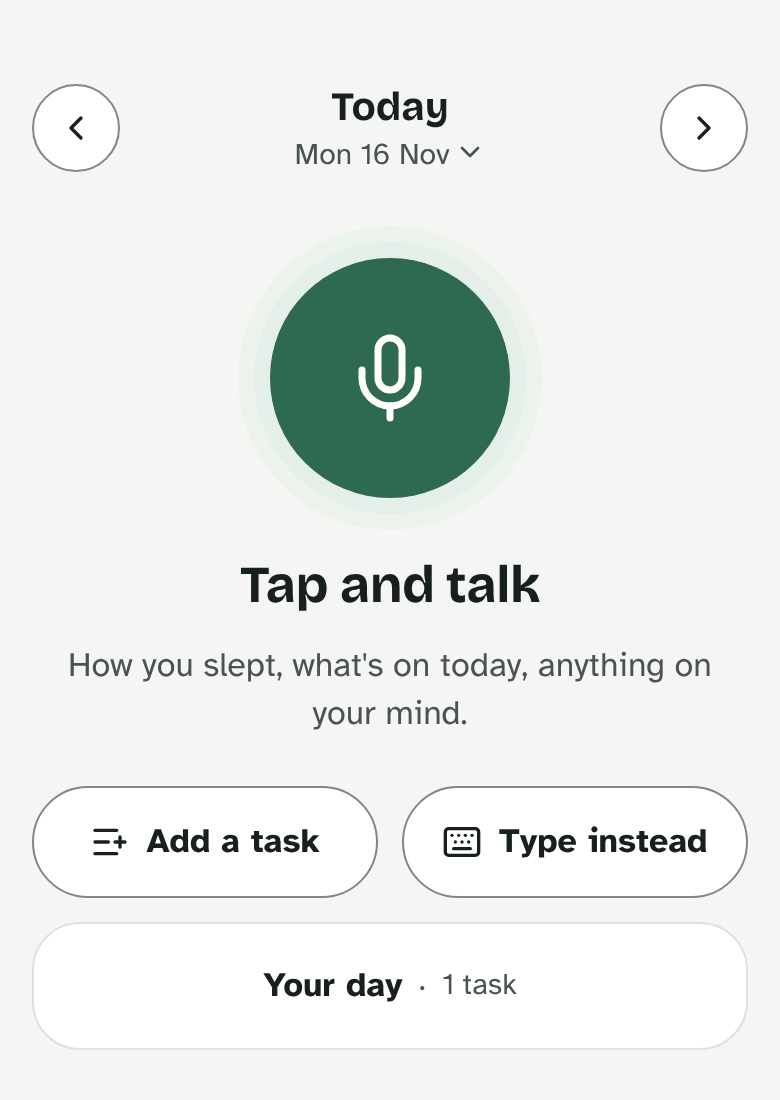
- Through the year, a short morning check-in and an evening ramble (I often just talk) build up the wins, challenges, worries and gratitude.
- Each week, those are drawn together into patterns: the topics that keep coming up.
- At the year, the review page shows the year's patterns and offers to draft answers to the reflection questions from what you actually recorded, which you then edit. That's the evidence-gathering step, mostly done for you.
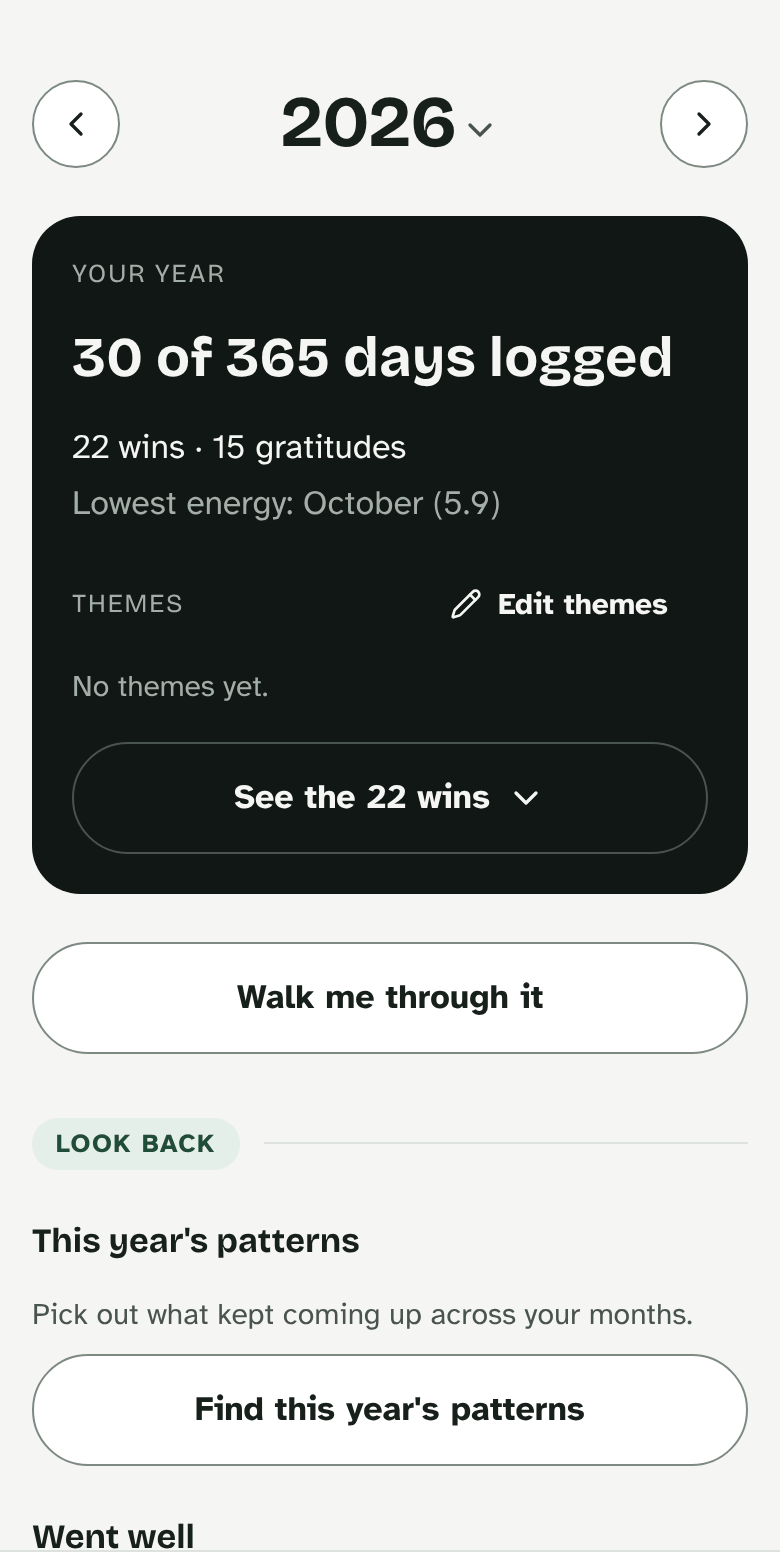
- For goals, "Make it SMART" sharpens a year goal, and "Break this down" proposes monthly goals, then weekly goals, then daily tasks, one level at a time.
You don't need an app for any of this. A notebook and a regular habit will get you most of the way. But if, like me, you'd rather spend the dead zone after Christmas thinking than trying to remember, it helps.
Try it for free, or just steal the questions.
This post was drafted with Claude from my dictated answers, then edited by me.